What is PCR Plastic?
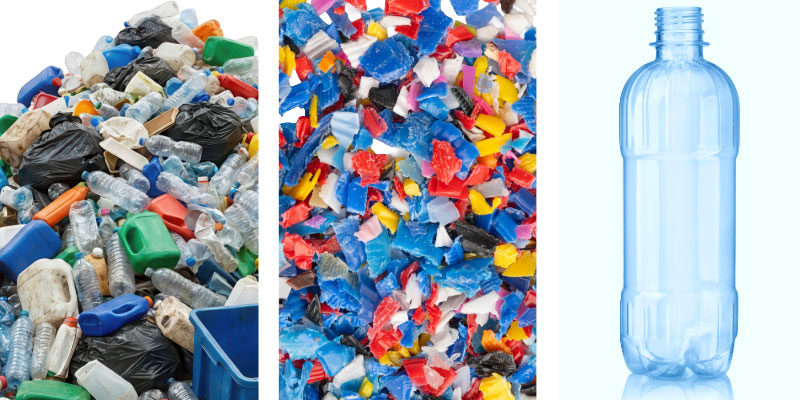
Common plastic waste include:
- Water bottles.
- Shampoo and detergent bottles.
- Food containers.
- Household plastic waste.
Plastic Waste Classification
Code | Polymer Resin | Example | Recyclability |
1 | PET | Cough Syrup Bottle | High |
2 | HDPE | Tablets in Bottle Pack | High |
3 | PVC | Blister Pack | Difficult |
4 | LDPE | Bags | Limited |
5 | PP | Caps | Improving |
6 | PS | Trays | Low |
7 | Other | Laminate | Very Difficult |
PCR Plastic Recycling Processes
1. Mechanical Recycling
The process includes:
- Sorting (using AI and infrared cameras).
- Shredding.
- Cleaning and washing.
- Drying.
- Melting and extrusion.
But this process has some limitations:
- The quality is lower than virgin plastic.
- Contains impurities due to mixed plastic waste.
- Residual chemicals may be present, like BPA or phthalates.
- The packaging is exposed to controlled conditions (temperature, time, solvents).
- It simulates real storage conditions like long-term and accelerated stability.
- The number of substances migrating into the product is tested.
Migration modelling is a theoretical or predictive approach used to test material, like stress study at 50° C & 80 %RH.
- It uses scientific equations to estimate how much substance could migrate.
- Helps to predict long-term behaviour without running lengthy experiments.
- Useful for evaluating worst-case scenarios.
This reduces testing time and supports risk assessment during development stage.
This test evaluates how well the recycling process removes the contaminants.
- Known chemicals (called surrogates) are intentionally added to plastic waste.
- The recycling process is applied.
- The reduction in these contaminants is measured.
If the process removes these model contaminants effectively, it is considered safe for use.
2. Chemical Recycling (Advanced Recycling)
In this process:
- Plastic is broken down into its original building blocks (monomers) with the help of chemicals.
- Then it is used to create high-quality plastic, resulting materials are very similar to virgin plastic.
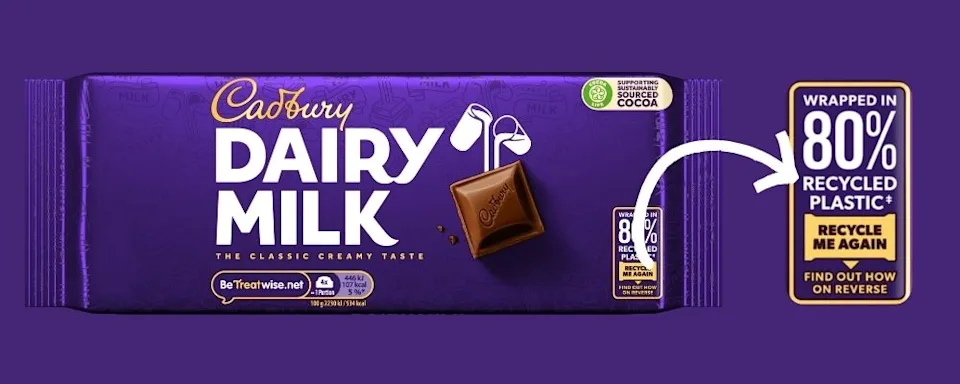
Because of its purity, this type of PCR plastic can be used for food and pharmaceutical packaging.
However, there are challenges:
- It is under lab scale.
- It requires high investment and chemicals.
- Environmental impact (LCA) needs to check.
Note: Minimum 5–10 years is required for full scale implementation.
How Can We Use PCR Plastic in Pharmaceutical Packaging?
For example:
- 30% PCR plastic.
- 70% virgin plastic.
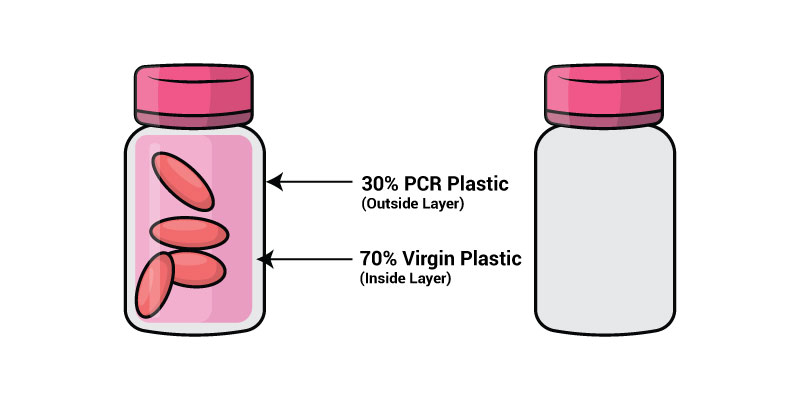
In such combination:
- Virgin material is used on the inner layer where product will come in contact.
- PCR material is used in the outer layer of the material.
This reduces the risk of contamination while still supporting sustainability goals.
Before using PCR plastic, companies must perform:
- Risk assessment.
- Stability studies.
These studies include:
- Long-term stability (25°C / 65% RH).
- Accelerated stability (40°C / 75% RH).
- Stress conditions (50°C / 80% RH).
Testing must be as per targeted market/country.
Examples of PCR Plastic in Pharmaceutical Packaging
1. Otsuka Pharmaceutical
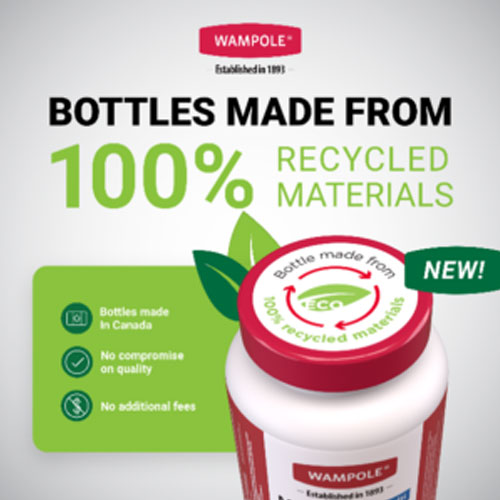
2. Jamp Pharma
3. Chiesi Group
Regulations for PCR Plastic
Currently, there are some regulations for food packaging in countries like:
- European Union (EU).
- United States (US).
Manufacturers must submit safety data and get the approval for market launch.
However, for pharmaceuticals:
- There are no specific global regulations for PCR plastic packaging.
- This is due to drug safety.
Until regulations are clearly defined, companies should rely on:
- Internal quality standards.
- Scientific risk assessment.
- Stability and migration studies.
- Secondary packaging.
- OTC and topical packaging.
Benefits of PCR Plastic in Pharmaceutical Packaging
1. Waste Reduction
2. Lower Carbon Emissions
3. Reduced Use of Natural Resources
4. Supports Circular Economy
5. Improves Brand Image
Challenges of Using PCR Plastic
1. No Standard Specification
2. Material Quality
PCR plastic quality can vary:
- From batch to batch.
- From one supplier to another.
3. Risk of Migration
4. Pack Appearance
PCR plastic may have:
- Slight colour variation due to thermal degradation, yellowish to dark colour.
- Less clarity compared to virgin plastic.
5. Mechanical Strength
Future of PCR Plastic in Pharma
1. Rapid Growth of Chemical Recycling
2. Digital Material Tracking
Projects like Digital Product Passport (HolyGrail 2.0) are working on:
- Better waste sorting.
- Improved traceability.
- Higher recycling efficiency.
