Wash-off Label Adhesive Technology: The Future of Sustainable Packaging

Wash-off label technology is one of the most important innovations in sustainable packaging because it reduces waste and increases recycling quality and output.
Traditional labels often remain attached to packaging material during recycling, which later on contaminate the recycling stream and reduces the quality of recycled material.
Wash-off labels are designed to separate easily from the containers during the recycling process, resulting in pure recycled material and higher recycling efficiency.
In this blog, we will explore everything you need to know about Wash-off Label Adhesive Technology, including how it differs from traditional labels, why it is gaining attention as a sustainable packaging solution, its benefits for recycling and bottle reuse, common industry concerns and the future advancement.

What Is Wash-Off Label Adhesive Technology?
Wash-off Label Adhesive Technology
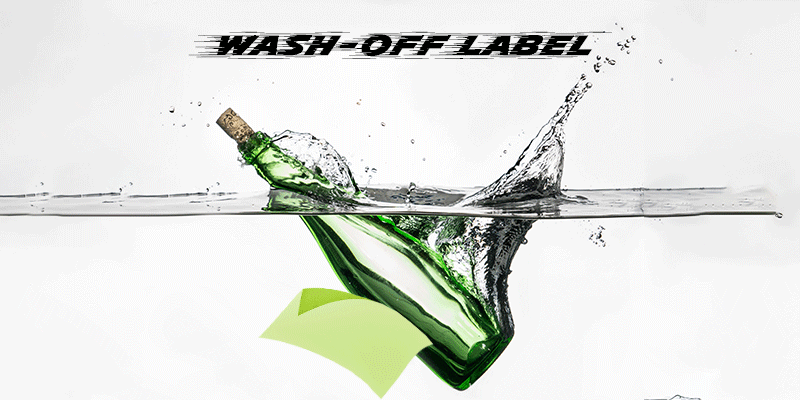
Wash-off Label Adhesive Technology is designed for only adhesive system that perform in two different ways.
  1. During the product’s life cycle, the adhesive:
  • Sticks firmly to the container
  • Survives transportation and handling
  • Resists normal moisture exposure
  • Maintains label appearance

At this stage, the label doesn’t peel-off or separate from the packaging material.

  1. During recycling, the adhesive:
  • Loses adhesion bond (During the alkaline wash)
  • Releases the label easily from the container
  • Reduces the contamination
This dual functionality is what makes the wash-off label adhesive technology unique and effective.
Several wash-off label technologies have been recognised by the Association of Plastic Recyclers (APR) because they meet critical recyclability requirements and do not negatively affect recycling streams.
APR certification is often considered one of the most important design for recycling benchmarks in North America.

Why Traditional labels are the problem for Recycler?
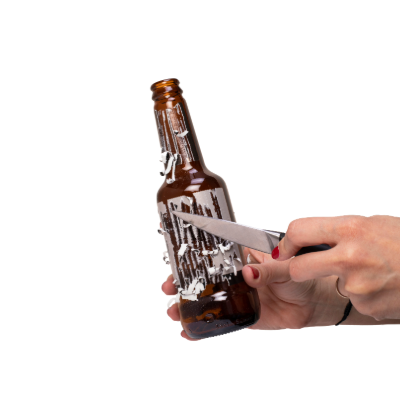
Traditional labels are designed to bind permanently to the packaging materials which causes label to remove difficult during the recycling.
When plastic bottles along with labels are shredded into flakes, the label and adhesive often remain attached to the flakes.
These adhesive residues, label fragments, inks and coatings can act as contaminants in the recycling stream.
As a result, the quality of recycled plastic decreases, leading to issues such as haze, discoloration and lower material purity.
This contamination can also reduce recycling efficiency, decrease recycling output and limit the amount of high-quality recycled plastic available for reuse in new packaging applications.
For reusable glass bottles, traditional labels can create additional challenges.
Because the label is permanently attached, extra manpower and effort are required to remove it before the bottle can be reused.
The label must be removed carefully to avoid scratching or damaging the bottle appearance, which can increase processing time and cost.
Traditional label removal

What is the Difference Between Wash-off Labels and Traditional Labels?

Parameter

Traditional Label

Wash-off Label

Label adhesion during usage

Strong

Strong

Label adhesion during recycling

Attached to material

Separate from material

Material contamination

Higher

Lower

Recycling efficiency

Moderate

High

Quality of recycled material

Moderate

High

Circular economy

Limited

Strong

The biggest difference is that traditional adhesives remain attached throughout their lifecycle, while wash-off adhesives label release quickly under recycling conditions.

Environmental Benefits

1. Higher Recycling Efficiency

When labels separate cleanly, recyclers can recover more usable material and reduce contamination risk.

2. Better Quality Recycled Plastic

Cleaner PET flakes mean:

  • Lower haze
  • Better transparency
  • Improved colour quality
  • Greater potential for bottle-to-bottle recycling
For reusable glass bottles, wash-off labels can be removed easily during the bottle washing process without leaving significant adhesive residue.

3. Reduced Plastic Waste

More packaging can enter into the recycling streams instead of being rejected and sent to landfill.

4. Supports Circular Economy

Wash-off label technology helps to convert post-consumer packaging material into new one, reducing dependence on virgin plastic.

5. Increased Availability of PCR Material

Brands who are seeking for higher percentages of PCR plastic can get benefit from this cleaner recycling system.

What Happens if Wash-off Labels Mix with Traditional Labels at Recycling Facilities?

This is one of the biggest practical problems industries are facing today.
Recycling facilities process millions of containers daily from multiple brands.
If wash-off labels are mixed with conventional labels:
Wash-off Labels
  • Separate quickly and leave minimal residue
Traditional Labels
  • May leave adhesive residue and can contaminate recycling system
The recycling process still works, but the full benefits of wash-off label technology become diluted by the presence of conventional labels.
This is one reason why wide adoption of industry is required.

Does Wash-off Label Adhesive Migrate into the Products?

Not necessarily.
But, yes, wash-off label adhesives can migrate just like conventional pressure-sensitive adhesives.
However, wash-off label adhesive technology itself does not increase the risk of migration automatically.

Migration depends on various factors, such as:

  • Adhesive formulation
  • Container material
  • Product formulation
  • Storage conditions
  • Contact time
  • Presence of functional barriers

Is It Compatible with All Types of Packaging Materials?

No, one type of wash-off label adhesive is not compatible with every packaging materials.
The adhesive must be specifically designed for the particular substrate and the intended recycling process.

Material Type

Compatibility with Wash-Off Label

PET Bottles

Excellent

HDPE Bottles

Possible, but requires specialised adhesive formula and washing conditions.

Glass Bottles

Excellent

Metal Containers

Possible, but requires specialised adhesive formula and washing conditions.

Wooden Containers

Technically possible, but generally not a recycling-driver application.

Why One Adhesive Can’t be Compatible with All Packaging Materials?

Different materials/substrates have different properties and surface energy.

Glass

  • Very high surface energy
  • Non-porous
  • Alkaline washing already exists

PET

  • Surface energy: moderate
  • Smooth surface
  • Designed for bottle-to-bottle recycling

HDPE

  • Low surface energy
  • Harder to bond
  • Different recycling process from PET

Metal

  • May be coated, painted, lacquered
  • Requires different adhesion characteristics

Wood

  • Porous
  • Absorbs adhesive
  • Surface roughness varies considerably
Therefore, an adhesive designed for PET may not be suitable for glass or any other materials.

Is It Suitable for All Printers, Printing Techniques and Decorations?

Wash-off labels are generally compatible with many modern printing technologies, but they are not universally compatible with every printing process, decoration technique, foil stamping, laminate or embellishment.
Each label adhesive formula should be qualified and tested for recyclability before implementation.
Printing Technologies
Most commercial wash-off labels can be printed using flexography, gravure, offset UV, screen printing and digital printing (HP Indigo, toner, inkjet depending on facestock).
This is generally not the major challenge.
The Bigger Issue is with Decoration and Ink Systems
A wash-off label can separate easily from a PET bottle, but if the decoration components contaminate the recycling stream, quality can be affected negatively.
Example 1: Label with Heavy Metallic Inks
The label can be removed successfully, but excessive metallic pigments can still create contamination issues for the recycling.
Example 2: Cold Foil Decoration
For recycling facilities, foil can sometimes become a contaminant if not properly separated.
Example 3: Lamination

A laminate may:

  • Change density characteristics.
  • Affect float-sink separation.
  • Affect wash-off performance.
Therefore, lamination is not also good to do.
Important Note:
Many people think:
“I am using a wash-off adhesive, therefore my package is recyclable.”
Not necessarily.
The entire construction must be evaluated for facestock, ink, varnish, foil, lamination, adhesive, container and recycling process.
If one component is incompatible, the sustainability benefit may be reduced.

Does Wash-off Label Technology Have Lower Shelf Life?

No, wash-off label does not have lower shelf-life.
A properly designed wash-off label will perform throughout the product’s life cycle just like a conventional label.
The main difference is that it is designed to release under recycling wash, like hot water or alkaline wash.
UPM Raflatac states that their wash-off labels provide same performance as traditional label while enabling quick and clean separation during recycling.

What About Label Replacement Risks?

This is an important consideration for pharmaceutical and premium products.
Traditional labels often use permanent adhesives.
If someone attempts to remove the label, the label may tear or become damaged, working as a tamper evident feature.
With wash-off labels, a common question is:

“Can someone remove or replace label easily? “

The answer depends on the adhesive formulation.
Modern wash-off labels are specifically formulated to release under controlled recycling conditions rather than normal handling conditions.

Future Advancements in Wash-off Labels

Wash-off Label Adhesive Technology is now focus on:

1. Automated De-labelling

In future, recycling facilities may remove labels before shredding, producing even cleaner recycled materials.

2. Digital Watermarks

Invisible digital codes could help to sort out different packaging materials more accurately before recycling.

3. Improved Adhesive Chemistry

New formulations may:

  • Improve recycling efficiency
  • Reduce chemical usage
  • Enhance performance on multiple substrates

4. Smart Circular Packaging

Future packaging systems may combine:

  • Wash-off labels
  • Reusable containers
  • Digital identification
  • AI-assisted sorting
to create highly efficient recycling ecosystems.

Conclusion

Wash-off Label Adhesive Technology represents an important step toward more sustainable packaging. By allowing labels to separate cleanly during recycling, it improves recycling efficiency, reduces contamination and supports the production of higher-quality recycled materials.
While the technology is not a perfect solution and still faces challenges such as mixed recycling streams, compatibility considerations, material cost and qualification requirements.
For industries such as food, beverages, personal care and pharmaceuticals, wash-off label technology provides an opportunity to align packaging design with modern sustainability goals while maintaining product performance.

As recycling regulations become stricter and circular economy initiatives expand globally, Wash-off Label Adhesive Technology is expected to play an important role in the future of sustainable packaging.

About The Author

Leave a Comment

Your email address will not be published. Required fields are marked *

Scroll to Top