
Is glass biodegradable? No, conventional glass is not biodegradable. Unlike organic materials, glass cannot be broken down naturally by microorganisms such as bacteria or fungi. In glass, there is nothing to consume by living organism. So, glass is not biodegradable.
So does that mean glass is environmentally harmful?
Not necessarily. Its 100% recyclability, chemical stability and ability to be reused make glass one of the most sustainable packaging materials today.
In this blog, we’ll explore whether glass can be biodegradable, how glass is manufactured, its environmental impact, how it compares to plastic and why its recyclability makes it a valuable material in a circular economy.
How Glass Is Made
Glass is made from three different raw materials:
- Silica sand (SiO2)
- Soda ash (Sodium Carbonate) Na2CO3
- Limestone (Calcium Carbonate) CacO3
Sometime recycled glass, known as cullet is often added to the mixture because it melts more easily and reduces energy consumption for making new glass material.
The raw materials are then fed into a furnace and heated at temperatures of approximately 1,700°C.
At this high temperature, the silica or sand melts, which then combines with soda ash and limestone to form a homogeneous molten glass.
Soda ash lowers the melting temperature of silica which makes manufacturing process more energy saving.
Limestone improves the chemical stability and strength of the glass material.
Once all the ingredients are added and melted, the molten glass is refined to remove air bubbles and impurities.
The glass is then shaped into different products through various forming methods such as blowing, pressing, moulding or drawing, depending on the product to be made.
After forming, the glass enters an annealing chamber where it is cooled gradually in a controlled manner. This controlled cooling relieves internal stresses and prevents cracking.
Finally, the glass products undergo quality inspections before being packaged and transported to customers.
Does Glass have negative impacts on the environment?
Glass is considered as most sustainable packaging material, but still it is not completely carbon free.
Glass production requires extremely high temperatures, often around 1,700°C, resulting in significant energy consumption and carbon emission.
The extraction of silica sand, limestone and soda ash also uses natural resources.
Additionally, glass is heavier than many alternative packaging materials. Transporting glass bottles and containers from one place to another requires more fuel, leading to increased transportation costs and carbon emissions.
Despite these challenges, glass is considered as one of the most sustainable packaging materials available today because it can be recycled endlessly without losing its quality.
This unique characteristic makes glass very different from many other non-biodegradable materials.
Why Is Glass Considered Sustainable?
Glass is often regarded as a sustainable packaging material because:
- It is 100% recyclable.
- It can be recycled multiple times without quality loss.
- It is chemically inert and non-toxic.
- It does not leach harmful chemicals into food or beverages.
- It does not generate micro-plastics.
- It is highly durable and reusable.
- It provides excellent barrier protection against moisture, oxygen and contaminants.
Unlike many petroleum-based plastics, glass does not break down into micro-particles that contaminate soil, rivers, oceans or groundwater.
However, discarded broken glass can create safety hazards for humans and animals.
Researchers estimate that conventional glass can remain in the environment for thousands of years (4,000 and 20,000 years) depending on environmental conditions and glass formulation.
Therefore, proper collection and recycling of glass material is important.
Is Glass Biodegradable Compared to Plastic?
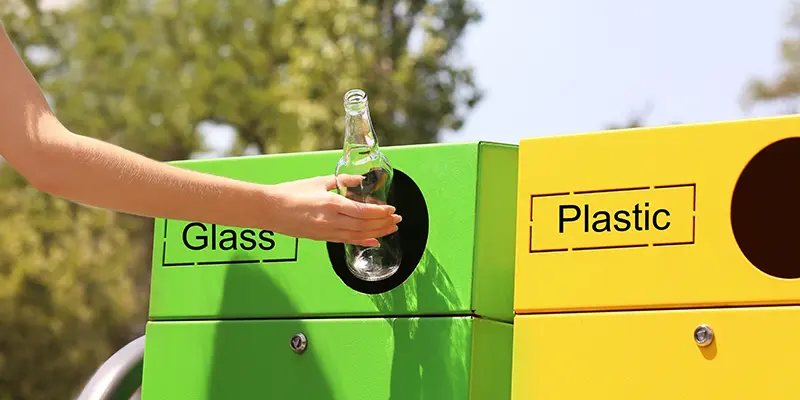
Both glass and petroleum-based plastic are considered as a non-biodegradable material.
Yet glass is often viewed as the more sustainable packaging material.
The main reason, its recyclability and environmental safety.
Most plastics degrade over time into smaller fragments known as micro-plastics. These particles can contaminate water bodies, agricultural land, wildlife and even the food chain.
Glass behaves differently. When broken, it remains as a glass rather than transforming into micro-plastics.
Furthermore, plastic recycling is a down cycling, where recycled plastic has an inferior quality. After multiple recycling, many plastics become not useful, creating plastic pollution.
Glass does not have this limitation.
A recycled glass bottle can become another glass bottle repeatedly without losing quality.
This closed-loop recycling system makes glass a preferred packaging material for many food, beverage, cosmetic and pharmaceutical applications.
Is Glass Recyclable?
Yes, glass is recyclable and it is one of the most successfully recycled materials globally.
The recycling process converts used glass products into fine powder to manufacture new materials.
Since glass maintains its chemical structure during melting, the recycled glass material is equivalent to virgin glass.
Recycling of glass helps to conserve raw materials, reduce the energy consumption and carbon emission.
Because of these, increasing in glass recycling is considered an important step to reduce environmental impact.
How to Recycle Glass
Glass recycling follows a systematic process that transforms discarded materials into valuable raw materials.
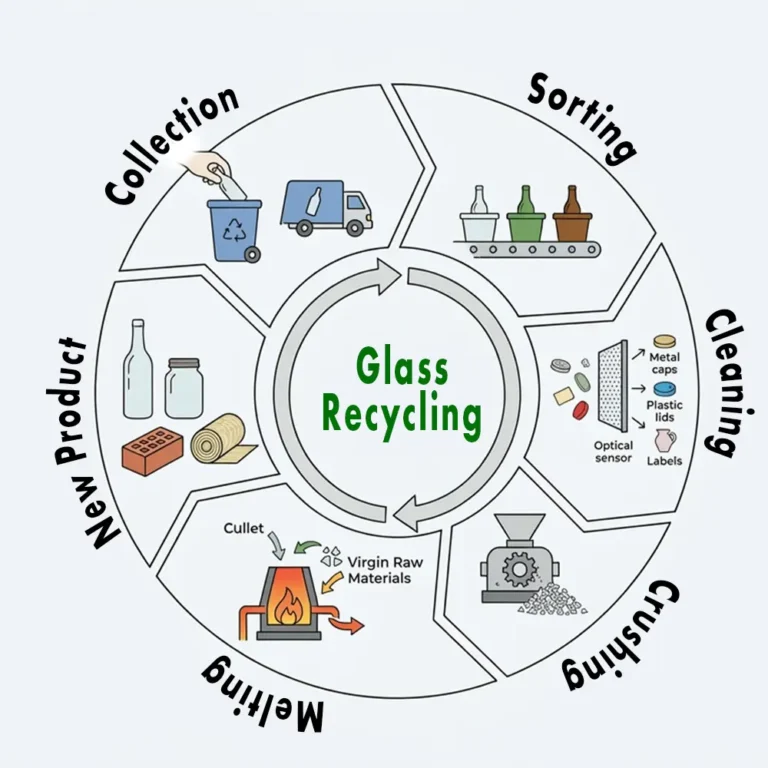
1. Collection
Used glass bottles are collected through household recycling programmes or bottle banks.
Consumers should empty bottle before disposal and remove excessive food residues whenever possible.
2. Sorting
Collected glass is transported to a recycling facility where it is sorted based on colour:
- Clear (Flint)
- Green
- Brown (Amber)
Colour separation improves the quality of recycled glass and ensures consistent appearance in new products.
3. Removal of Contaminants
Recycling facilities remove contaminants such as:
- Metal caps
- Plastic lids
- Labels
- Ceramics
- Stones
- Food residues
Advanced sorting technologies use magnets, optical scanners, air separation systems and manual inspection.
4. Crushing into Cullet
The cleaned glass is crushed into small fragments known as cullet.
Cullet is the primary feedstock used in recycled glass manufacturing.
5. Melting
The cullet is mixed with virgin raw materials and placed into furnaces.
Since cullet melts at a lower temperature than raw materials, using cullet in glass manufacturing significantly improves energy efficiency.
6. Manufacturing New Products
The molten glass is moulded into:
- Bottles
- Jars
- Containers
- Fibreglass insulation
- Construction materials
The cycle can then be repeated again and again.
What Kind of Glass Can Be Recycled?
The following glass products are commonly recyclable:
- Beverage bottles
- Food jars
- Pharmaceutical vials
- Cosmetic bottles
- Glass packaging containers
However, some specialised or coated glass are not recycled, such as:
- Window glass
- Mirror glass
- Tempered glass
- Borosilicate cookware
- Ceramic materials
- Crystal glass
Why Broken Glass Is Not Recyclable?
Many people assume that all broken glass can be recycled, but the answer depends on the type and condition of the glass.
Small broken fragments can be difficult to identify by sorting equipment and create safety risks for facility workers.
If the source of the broken glass cannot be identified, it may be difficult to separate.
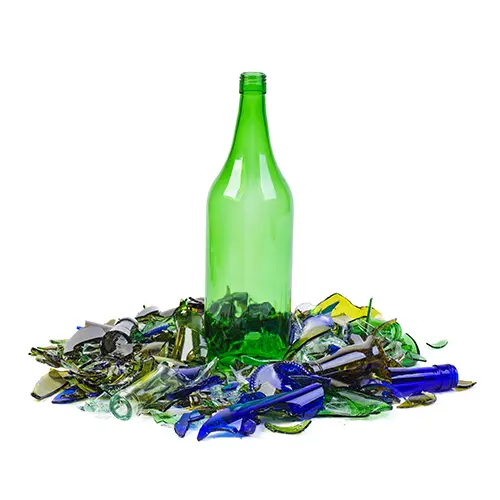
For example, mixing tempered glass or ceramic fragments with glass bottle can contaminate entire batch recycling or create quality problems.
Large quantities of clean glass container or cullet can usually be recycled, but unidentified mixed broken glass is often rejected by recycling systems.
Benefits of Glass Recycling
1. Energy Savings
Recycling of glass reduces energy consumption because cullet melts at lower temperature than virgin raw materials, like silica.
By using cullet, we can save up to 30% energy.
2. Reduced Carbon Emissions
Lower furnace temperatures mean lower carbon emissions.
3. Conservation of Natural Resources
Glass recycling reduces the demand for new raw materials:
- Silica sand
- Soda ash
- Limestone
This helps to preserve natural resources and reduces mining activities.
4. Less Landfill Waste
Recycling prevents glass from occupying valuable landfill space for thousands of years.
5. Infinite Recyclability
Unlike many materials, glass can be recycled repeatedly without losing quality, making it an ideal circular packaging material.
Can Glass Become Biodegradable?
Scientists in China have recently developed a biodegradable and biorecyclable glass from amino acids and peptides.
The research was conducted by scientists from the Chinese Academy of Sciences and published in Science Advances.
According to the researchers, the material is produced through a heating and quenching process similar to traditional glass manufacturing and shows same optical and mechanical properties as in traditional glass.
Unlike conventional inorganic glass, this biomolecular glass can be degraded by microorganisms under composting conditions.
Perhaps, future of glass can be more sustainable.
However, this bio-technology is at lab scale and will take time for commercialization.
Further development, full life cycle assessment, cost optimisation and industrial validation will be required before biodegradable glass becomes widely available.
Conclusion
So, is glass biodegradable?
No, glass is not biodegradable because microorganisms cannot break it down naturally. A glass bottle discarded today could remain in the environment for thousands of years.
However, being non-biodegradable does not mean that glass is harmful to the environment. Unlike many other materials, glass is chemically stable, does not produce micro-plastics, does not leach harmful substances and can be recycled endlessly without losing quality.
Its recyclability is what makes glass one of the most sustainable packaging materials available. While manufacturing glass requires significant energy and generates carbon emissions, effective recycling programmes can greatly reduce these impacts.
