
Packaging plays a very important role in our daily life.
From food and beverages to medicines, cosmetics and household products, packaging protects products, increases shelf life and makes transportation easy.
However, once the product is used, the packaging often becomes waste. Most of this waste, especially plastic packaging, ends up in landfills, open dumps, rivers or oceans.
India generates millions of tonnes of packaging waste every year.
Municipal bodies already struggle to manage all these wastes.
This is where Extended Producer Responsibility (EPR) comes into the picture.
EPR is an important policy tool that shifts responsibility for packaging waste from the public and government to the companies that introduce packaging into the market.
In simple words, EPR ensures that companies take responsibility for what happens to their packaging after consumers throw it away.
Here, we explained the role of EPR in packaging in very simple language so that anyone can understand the concept without legal or technical confusion.
Introduction
What Is EPR?
EPR stands for Extended Producer Responsibility.
Under EPR, a producer’s responsibility does not end when a product is sold.
Instead, it is “extended” to include the collection, recycling and safe disposal of packaging waste after product consumption.
For an example,
Think about a plastic water bottle:
- A company manufactures and sells bottled water.
- You buy the bottle, drink the water, and throw the bottle away.
- Normally, the waste becomes the responsibility of the municipality.
Under EPR:
- The company that sold the bottle is responsible for ensuring that the plastic bottle is collected and recycled properly.
This approach encourages companies to think about packaging design and material consumption.
Benefits of EPR in Packaging
Packaging waste is one of the biggest contributors to environmental pollution. EPR helps to address this problem at a certain level.
1. Helps to Reduce Environmental Pollution
Plastic packaging takes hundreds of years to decompose. If not managed properly, it pollutes land, water and air. EPR ensures that packaging waste is collected and processed instead of being dumped or burned.
2. Reduces Burden on Municipal Bodies
Municipal corporations already spend large amounts of money on waste collection and disposal. The EPR policy shifted this responsibility on PIBO.
3. Promotes Sustainable Packaging Design
When companies are responsible for waste management, they are more likely to:
- Optimize their packaging design
- Use recyclable materials or PCR Packaging
- Avoid use of hard-to-recycle packaging material
4. Supports Circular Economy
EPR promotes recycling and reuse, helping materials stay in the economy instead of becoming waste.
Who Is Responsible Under EPR in Packaging?
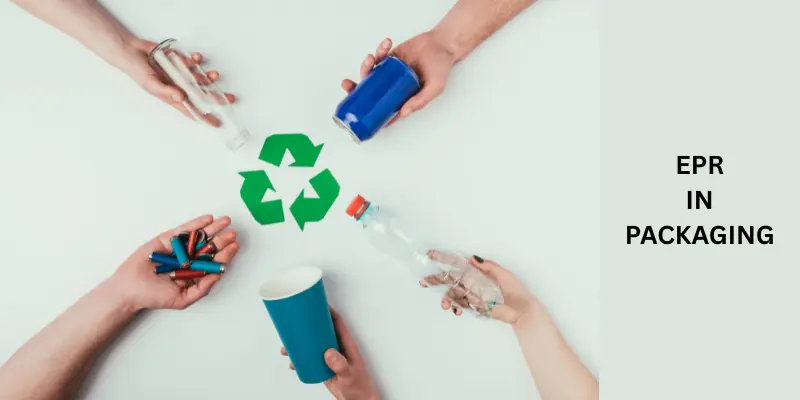
Under EPR rules, responsibility is shared among different stakeholders that are placing plastic packaging into the market. These are commonly known as PIBOs:
- Producers – Companies that manufacture packaging material
- Importers – Companies that import packaged products or packaging material
- Brand Owners – Companies selling products under their brand name
- Organization or Manufacturers – Entities producing plastic raw materials
In simple terms, any company that uses plastic packaging for the Indian market has EPR responsibility.
What Types of Packaging are Covered Under EPR?
EPR in India covers multiple waste streams, but plastic packaging is the most discussed and regulated.
Major Waste Streams Under EPR
- Plastic packaging
- Electronic waste (e-waste)
- Battery waste
- Tyre waste
- Used oil
Here, we focus mainly on plastic packaging, as it is widely used and commonly discarded.
Categories of Plastic Packaging Under EPR
To make EPR implementation easier, plastic packaging is divided into 4 categories:
1. Rigid Plastic Packaging
Examples:
- PET bottles
- HDPE containers
- Other plastic jars
These are relatively easy to collect and recycle.
2. Flexible Plastic Packaging
Examples:
- Plastic pouches
- Sachets
- Carry bags
These are lightweight and difficult to collect, making recycling process challenging.
3. Multilayer Plastic Packaging
Examples:
- Chips packets or BOPP films
- Shampoo sachets
These contain layers of different materials and are difficult to recycle.
4. Compostable and Biodegradable Plastics
These are bioplastics designed to decompose under specific conditions, but they are still covered under EPR.
How EPR Works in Packaging: Step-by-Step
Understanding EPR becomes easy when break into few simple steps:
- A company sells products with packaging.
- Consumers use the product and discard the packaging.
- Packaging waste is collected through formal or informal systems.
- Waste is sent to recyclers or end-of-life processors.
- Proof of recycling or disposal is generated (EPR certificates).
- Companies submit compliance reports to authorities.
This system ensures accountability and traceability of packaging waste.
Role of Government and CPCB in EPR
The Ministry of Environment, Forest and Climate Change (MoEFCC) and the Central Pollution Control Board (CPCB) are responsible for implementing EPR in India.
Key Responsibilities of CPCB
- Issuing EPR guidelines
- Managing the centralized EPR portal
- Registering companies and recyclers
- Monitoring compliance
- Taking action against non-compliance
State Pollution Control Boards (SPCBs) support CPCB at the state level.
Role of Recyclers and Plastic Waste Processors
Plastic waste processors play a key role in EPR implementation.
Types of Plastic Waste Processors
- Plastic recyclers (mechanical recycling)
- Waste-to-energy plants
- Cement co-processing units
- Waste-to-oil facilities
Only authorized and registered processors can generate EPR certificates, which act as proof that packaging waste has been properly managed.
EPR Certificates: What Are They?
EPR certificates are digital proof that a certain quantity of plastic waste has been:
- Recycled, or
- Safely disposed of
Companies purchase these certificates to meet their EPR targets. While certificates help track compliance, excessive dependence on them without real waste collection can weaken the spirit of EPR.
How EPR Encourages Sustainable Packaging
EPR directly influences packaging design decisions.
Companies start focusing on:
- Reducing plastic weight
- Using mono-material packaging
- Increasing recycled content
- Designing refillable and reusable packaging
This shift supports long-term sustainability goals.
Challenges in Implementing EPR in Packaging
Despite its benefits, EPR faces several challenges:
- Limited recycling infrastructure
- High dependence on informal waste pickers
- Complex compliance procedures
- Cost pressure on recyclers
- Lack of awareness among small businesses
Addressing these challenges is essential for effective EPR implementation.
Future of EPR in Packaging
The future of EPR in India looks promising:
- Stricter monitoring and audits
- Higher recycling targets
- Increased use of recycled plastics
- Better packaging innovation
EPR will play a central role in India’s transition toward sustainable packaging.
Conclusion
Why EPR Is Important for Everyone.
EPR is not just a regulatory requirement—it is a responsibility toward the environment.
By making companies accountable for packaging waste, EPR:
- Reduces pollution
- Improves recycling
- Encourages sustainable packaging
- Protects natural resources
For a cleaner and greener future, EPR in packaging is not optional—it is essential.
Frequently Asked Questions (FAQs)
EPR means that companies are responsible for managing packaging waste after consumer use.
No, EPR also applies to e-waste, batteries, tyres, and other waste streams.
Initially, costs may increase, but better packaging design can reduce long-term expenses.
EPR improves waste collection, recycling, and reduces pollution.